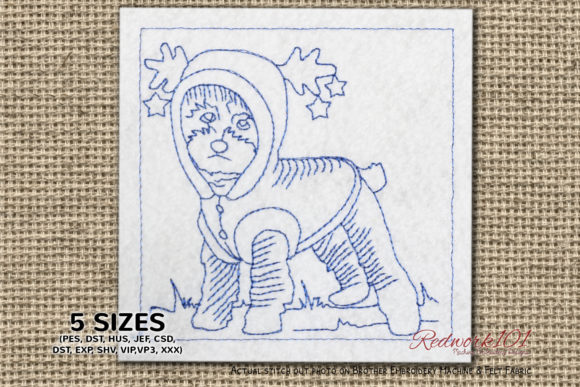
Designing Christmas Dog Costumes for Holiday Markets
From my booth at the weekend craft fair, surrounded by embroidered tote bags, aprons, and cheerful holiday gifts, I'm constantly evaluating which designs will catch a customer's eye and justify the production time. Today, I'm reviewing the Dog Christmas Costume Lineart Design. This design, at first glance, leans heavily into the cute and festive categories, with a touch of playful humor. It promises a classic holiday theme with a specific, beloved pet angle, which is a powerful niche for handmade markets.
First Impressions and Market Mood
The concept is instantly understandable: a dog dressed for Christmas. This is a huge advantage at a busy fair. Customers scanning a table can grasp the theme in a split second. The lineart style suggests a clean, modern, and potentially minimal aesthetic, which can feel both decorative and premium on the right product. The optional box stitch detail mentioned in the description is a practical note for production; it tells me the design might be framed or contained, which can help with placement and visual balance on finished goods.
The fact that the outer box color can vary or be skipped means this design has inherent adaptability. This is crucial for batch production. I can match the accent color to my fabric choice or thread palette, ensuring brand consistency across my product line. For Christmas, this allows me to pivot between traditional red-and-green schemes or softer, rustic cream-and-sage combinations depending on my target customer.
Product Performance: Where This Design Excels
Not every machine embroidery design works well on every surface. Here’s how I see the Dog Christmas Costume Lineart Design performing across common craft fair products.
Standout Applications
- Tote Bags & Market Bags: This would be a strong focal point. The playful, seasonal theme on a functional bag creates a great giftable handmade product. It should be sized appropriately—not too small to lose detail, not too large to become overly dense.
- Pillow Covers: A fantastic choice for home decor. The cute, festive mood works perfectly here, adding a soft holiday touch. Lineart often translates beautifully to larger home goods.
- Tea Towels & Aprons: Kitchen textiles are holiday staples. This design injects fun into a utilitarian item. However, the texture of towels matters; I'd test on a scrap to ensure the design retains clarity on linen or terry cloth.
- Embroidered Patches: An excellent option for versatility. Patches can be sold standalone or applied to various items. The clear lineart should make for a crisp, identifiable patch.
Considerations for Other Products
- Caps: The curved surface of a cap can distort designs. I'd need to check the hoop size compatibility and potentially test the design scaled down. Small lettering or very dense stitch areas might not work here.
- Small Pouches & Gift Items: As an accent on a smaller item, it could be charming, but scaling is key. Tiny details in the costume might vanish at a very small size, so a careful test on scrap fabric is mandatory.
- Dark Fabrics: Thread contrast is vital. If the design uses primarily light lines, I'd need to plan a bold, contrasting thread color or potentially adjust the design assets for dark backgrounds to maintain visual appeal.
The Production Reality: Making It Sellable
Turning a digital embroidery file into a profitable small shop product requires practical planning.
Batch Production and Efficiency
The design feels inherently repeatable. The clear theme and likely straightforward composition mean I can run multiple items without the design feeling overly complex to produce repeatedly. This is ideal for stocking a booth. I would, however, confirm commercial licensing before selling any finished product to ensure my Etsy seller or fair booth is fully compliant.
Photography and Online Sales
For Etsy listings and printable mockups, this design should photograph well. The festive theme is visually appealing and tells a story. A clean lineart design on a neutral fabric background creates a strong, professional image that highlights the handmade quality. Creating at least one real mockup—not just a digital preview—is essential to see how light and shadow play with the stitches.
Technical Checks for Quality
Before I commit to a production run, my checklist includes:
- Inspecting the stitch density in any preview. Very dense areas can be challenging on thick fabric or towels.
- Reviewing the spacing between elements to ensure the design doesn't feel cramped or unstable.
- Using the correct stabilizer for the chosen fabric to maintain crisp lines.
- Comparing fabric colors against my intended thread palette to maximize contrast and customer attention.
Craft Fair Booth Strategy
In my booth display, the Dog Christmas Costume Lineart Design would serve as a niche anchor. It attracts dog lovers and holiday shoppers simultaneously. I might group products featuring this design together to create a themed section, boosting booth display strength. A standout item, like a well-made tote bag with this embroidery positioned prominently, acts as a conversation starter and drives buyer engagement.
The design enhances product value by adding a specific, emotional layer (pet love) to a generic holiday item. It feels personal, which is a key selling point for handmade products. Its success hinges on execution: clean stitching, thoughtful product pairing, and clear, joyful presentation.
Final Designer Notes
The Dog Christmas Costume Lineart Design has strong market potential for the holiday season. Its cute, festive mood and clear thematic focus are its greatest assets. To capitalize on this, I must treat it as a professional embroidery file and not just a cute image. Careful testing, attention to fabric and thread interactions, and strategic product application will determine whether it becomes a quick-sale item at my table or just another sample in my bin. My advice is to start with a single, well-chosen product—like a pillow cover or tote—create a flawless sample, and let that be the guide for your entire production run. That first real-world mockup will tell you everything about how this design will perform in the bustling, rewarding environment of the handmade market.